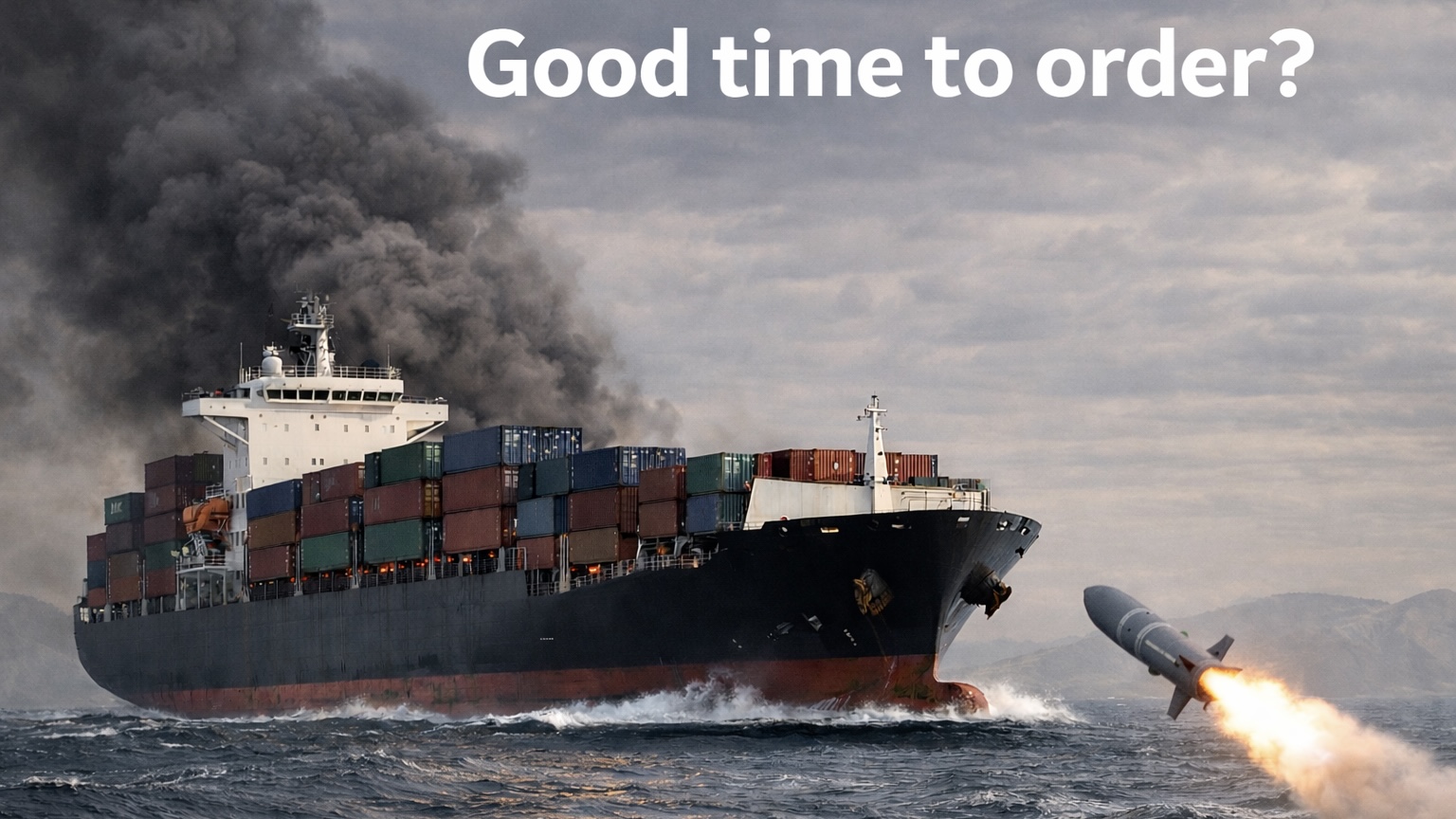
Iran War And Sofa Orders, Will Custom Sofas Be Delayed And Should You Buy In Stock Instead?
If you are thinking about ordering a new sofa right now, the question is no longer just which model or which colour. As of 11 March 2026, the bigger question is whether this is a smart time to place a custom order at all.
The war involving Iran is already feeding through into logistics. Major operators have moved fast. Maersk has introduced a temporary Emergency Bunker Surcharge, DHL Freight has switched to weekly fuel surcharge updates because the situation is affecting global logistics and European road transport, and CMA CGM has announced an emergency fuel surcharge from 16 March. In other words, this is not a theoretical risk sitting in the background. The cost pressure has already started to move through the system.
The shipping backdrop is serious. The latest Joint Maritime Information Center advisory rated the regional maritime threat as critical. It said commercial traffic through the Strait of Hormuz had almost ground to a halt, with only four confirmed commercial transits in a 24 hour period against a historical average of around 138 vessels. Reuters reported overall traffic through the strait had dropped 97% since the war began on 28 February 2026.
That matters to sofa buyers because furniture is bulky, expensive to move, and often reliant on long and complex supply chains. Even when a sofa is sold as European made, that does not always mean every part is European sourced. Industry sources show that upholstery businesses still use imported covers, mechanisms, springs, webbing and other specialist components, especially on motion models. That means a sofa can be assembled in Europe and still be vulnerable to disruption further upstream.
This is where the custom order question becomes important. A made to order sofa usually depends on a longer chain. The frame may be one place, the leather or fabric another, the motion hardware another, and the final assembly and delivery another again. S&P Global has already warned that Europe’s furniture retail sector is heavily exposed to Asian sea imports and specifically flagged seats and sofas as more exposed product groups.
So, is it a bad time to custom order a sofa?
Not in every case, but it is a riskier time than normal.
If you want an exact configuration, an unusual fabric, a specific left or right hand layout, or a power motion model with imported mechanisms, you are more exposed to delay than a buyer choosing something already sitting in a UK warehouse. That is the real distinction. Custom orders are not impossible. They are just less predictable. This is an inference based on the current routing, surcharge and component evidence, and it is strongest for bespoke and motion furniture rather than straightforward stock pieces.
Will prices rise?
There is a good chance of pressure building if the disruption continues. The World Bank has already shown that Red Sea rerouting increases distance and fuel burn sharply, and the British Chambers of Commerce found some UK firms were already reporting major container cost inflation and delays during the earlier Red Sea crisis. Reuters has also reported that rising diesel costs feed into freight transportation, manufacturing and ultimately the sticker price of goods, including furniture. That does not mean every retailer will raise prices tomorrow morning. It does mean the conditions for higher landed costs are clearly in place.
Could this become like COVID, where even European sofas were delayed because parts from the Far East were missing?
Not yet, and that distinction matters. COVID was a wider manufacturing and port shutdown story. This is more of a transport, fuel, insurance and component availability story. But the end result can still feel similar for the customer if a missing mechanism, delayed cover set or slower container route holds up the order. The World Bank has already warned that prolonged rerouting can create supply chain stress similar to the 2021 to 2022 period if it drags on.
What about the Houthis and mines?
That is part of the risk picture, but it needs to be stated carefully. The latest JMIC advisory did not report verified sea mine deployment in current reporting. However, it did say mining remains a key escalation variable and that limpet mine or sea drone attacks remain a credible concern in regional terminals. Reuters has also reported that mines are part of the threat set being considered in Hormuz. So the mine risk is not confirmed as an active widespread shipping reality in the current reporting, but it is absolutely part of why carriers and insurers are so cautious.
For consumers, the practical takeaway is simple. If speed, certainty and price stability matter most, in stock sofas make more sense in this kind of market. Stock already in the UK avoids most of the factory queue risk, most of the component chain risk and much of the immediate shipping uncertainty. It also gives buyers a better idea of what they are actually getting, because the exact item is already here.
That is why in stock buying becomes more attractive during periods like this. It is not just about getting a bargain. It is about reducing variables. SofaMax’s current sofas page is built around stock that is already here in the UK, ready for immediate delivery, which is exactly the kind of proposition many buyers start to value more when global shipping turns unstable.
The sensible consumer position right now is this. If you absolutely want a very specific custom model and are prepared for some uncertainty, you can still order, but you should ask harder questions about lead times, component dependencies, and whether the price is protected. If you want the safer play, especially for a fast move, renovation or room refresh, in stock offers look like the smarter option while this disruption remains live.
Sorces