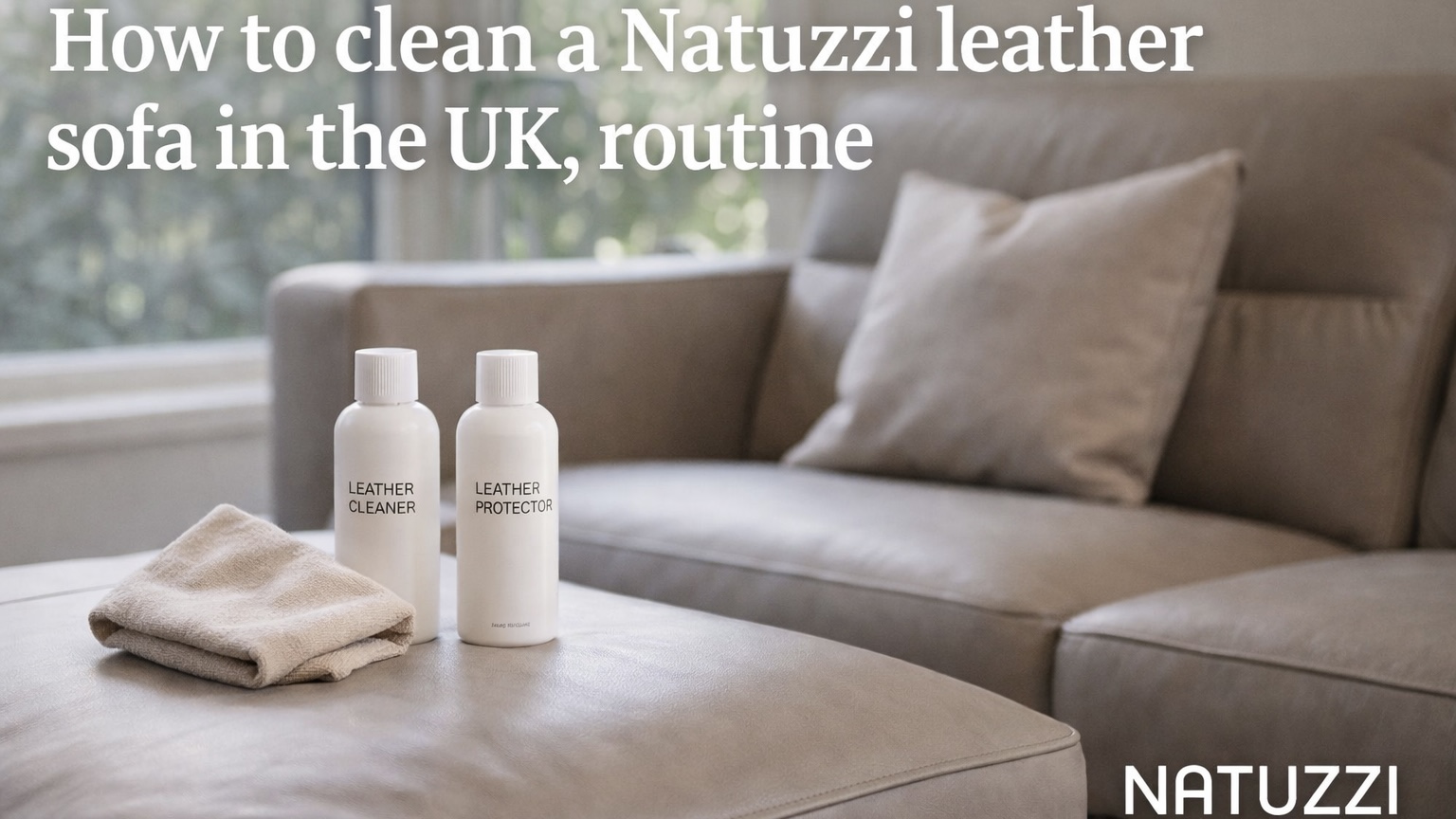
How to clean a Natuzzi leather sofa in the UK, the safe routine that works
If your Natuzzi leather sofa looks a little dull, feels slightly sticky, or is picking up marks faster than it used to, the solution is rarely aggressive cleaning. The best results come from a consistent, gentle routine that matches the type of Natuzzi leather you have, because Natuzzi finishes behave differently.
This guide gives you a safe UK routine you can repeat, plus a simple way to decide whether you have Protecta or Natural leather, what to use, what to avoid, and what to do when something spills.
Step one, identify your Natuzzi leather finish, Protecta or Natural
Most Natuzzi leathers sold for everyday family living are a more protected finish, often referred to as Protecta. These are designed to be more resistant to staining and easier to maintain.
Natural leathers are more open, more breathable, and often feel more organic to the touch. They can also show marks more easily and need a more cautious approach with moisture and cleaning products.
If you are unsure, default to the safest method in this article, light dry dusting, gentle blotting, minimal moisture, and a suitable leather cleaner designed for upholstery, or the brand recommended kit.
The UK safe routine for Natuzzi leather, weekly, monthly, and seasonal
Weekly routine, two minutes that prevents most problems
Use a clean, dry, soft white cloth to remove dust, crumbs, and everyday grit. Dust acts like a fine abrasive, especially on arm tops, headrests, and seat fronts. Natuzzi’s own care guidance repeatedly emphasises periodic dusting with a clean, dry, non abrasive cloth.
Monthly routine, refresh without over wetting
If the sofa needs more than dusting, use a very lightly dampened soft cloth and wipe evenly across a full panel rather than spot cleaning one small patch. Keep moisture minimal and avoid soaking seams. For many marks, especially on protected finishes, this is enough.
Seasonal routine, protect sensibly, do not overdo it
A leather protection cream can be a good preventative step, particularly in busy family rooms where food and drink are common. Apply sparingly and occasionally rather than constantly, because some protection products include moisturisers and conditioners, and overuse may weaken leather fibres over time.
Protecta versus Natural, what to use, what to avoid
If you have Protecta leather
What to use
A dedicated leather cleaner for upholstery, ideally the brand recommended cleaner, used gently on a soft white cloth. Natuzzi’s care documents advise blotting spills and then using the specific Natuzzi cleaner rather than improvising with harsh household products.
What to avoid
Do not use household multi purpose sprays, disinfectants, bleach, ammonia based products, or anything abrasive. Avoid excessive water and do not scrub. Avoid drying the leather with direct heat or a hair dryer.
If you have Natural leather
Natural finishes are less forgiving. Use the lightest possible touch, minimal moisture, and always patch test. Many retailer care guides warn that water based cleaning is not suitable for natural leathers and that excess water can cause issues.
What to use
Dry dusting first. If you need a cleaner, use a product specifically designed for natural or aniline style leathers, and follow its instructions precisely. Work evenly by panels, not just a spot, and stop if you see colour transfer.
What to avoid
Avoid leather wipes unless they are explicitly stated safe for natural leather. Avoid steam cleaners. Avoid vinegar, bicarbonate, and improvised detergents. Avoid vigorous rubbing, which can create shiny patches or remove finish.
The safest spill routine, what to do in the first 60 seconds
1. Blot immediately, do not rub
Use absorbent paper or a clean cloth and dab, lifting the spill away. Natuzzi’s care advice focuses on immediate removal by dabbing with absorbent cloth or paper.
2. Use minimal moisture if needed
If residue remains, use a slightly damp soft cloth and wipe gently, again avoiding heavy wetting.
3. Use a suitable leather cleaner only if necessary
If the mark persists, use a dedicated leather cleaner, ideally the Natuzzi recommended cleaner. Apply to the cloth, not directly onto the sofa.
4. Air dry naturally
Keep the sofa away from direct heat sources and do not use a hair dryer or direct sunlight to speed drying.
Common UK mistakes that shorten the life of leather sofas
Over wetting one small area and creating a visible tide mark
Using household cleaners because the sofa looks tough
Placing leather too close to radiators and heat sources during winter
Over conditioning protected leather too frequently
Scrubbing instead of blotting
Quick checklist, the safest minimum routine for every Natuzzi leather owner
Dust weekly with a clean, dry, soft cloth
Blot spills immediately, never rub
Keep moisture minimal, clean by panels not patches
Use a dedicated leather cleaner, preferably the brand recommended cleaner
Avoid direct heat and direct sunlight where possible
Use protection cream occasionally, not constantly
Sources,
https://sofamax.co.uk/caring-for-your-leather-sofa/
https://static.natuzzi.com/production/files/CARE_MAINTENANCE_NATUZZI_EDITIONS.pdf
https://www.dfs.co.uk/help/leather-care
https://www.furnitureclinic.co.uk/e-learning/how-to-clean-aniline-
For a great guide for UK shoppers to Consider corner Sofas have a look at this article.